
Walk a Chicago Street Record
A useful Chicago address search separates title, place, and presence. The Cook County Assessor can identify a parcel from its street address, but its public form has no owner-name box. CookViewer supplies the parcel shape and PIN. The Clerk's Recordings System then connects that PIN to recorded instruments and named grantors or grantees. A grantee receives an interest; a grantor transfers one. Neither label alone proves who sleeps at the address today.
Work from the most stable identifier to the least stable fact. Keep the PIN and legal description beside every name found. That prevents a same-number property on another street segment, municipality, or township from joining the wrong trail.
- Enter the house number and street name in the Cook County Assessor address search. Copy the parcel PIN and property location.
- Open CookViewer, select the parcel, and inspect adjacent lots, districts, imagery, and archive layers.
- Use the PIN in the Clerk Recordings System. Separate deeds from mortgages, liens, releases, and other filings.
- Check city permits by address and, for a known person, use the state voter confirmation form. Neither route produces a whole-street household list.
- For an older occupant, translate historic names and numbers before consulting Haines criss-cross volumes and alphabetical directories.
The chain is address to parcel, parcel to PIN, PIN to recordings, and only then name to other records. For a search focused on one named person rather than a block, use the Chicago resident lookup workflow.
Search Chicago Streets by PIN
The Assessor offers simple PIN, address, and neighborhood modes, plus an advanced range search. In the address form, enter the street name without a suffix such as Ave, St, or Place. Direction and unit fields help with dense Chicago blocks. CAPTCHA is required. The advanced form can scan house-number or unit-number ranges, which is far more useful for a street run than repeating one address at a time.
| Chicago search route | Fields to enter | Key limit |
|---|---|---|
| Assessor address | House number, direction, unit, street name, city | No public owner-name field; CAPTCHA required |
| Assessor advanced | House or unit range, partial PIN, township, class | Use ranges and parcel filters, not a ZIP |
| CookViewer | PIN, parcel address, address, or intersection | Select the correct parcel before reading details |
| City building records | Agreement and building address | Address is required; result limits apply |
A parcel card can show class, land and building values, characteristics, exemptions, appeals, and assessment history. Those fields describe the tax parcel. An exemption may be a useful lead, but it is not conclusive proof of the current household.
Three Chicago Address Meanings
A street directory result can appear inconsistent because county systems use addresses for different purposes. The physical or situs address locates the parcel. The tax-bill mailing address tells the Treasurer where to send notices and may point to an owner, trustee, company, or off-site destination. The Recorder may display an address as a convenient index label, while the PIN and legal description control the land record.
- Parcel
- A mapped unit of land identified in Cook County by a PIN.
- Situs address
- The physical location assigned to the parcel, not necessarily the tax mailing destination.
- Plat
- A recorded map that divides land into subdivisions, blocks, lots, or other legal units.
- Criss-cross directory
- A historical volume arranged by street and house number rather than by surname.
Compare the PIN, lot and block, legal description, grantor and grantee names, tax class, and dates. Never merge the three address columns into one supposed current residence.
Key distinction. A tax mailing address, deed grantee, assessor parcel, and current occupant are not automatically the same person or place.
Chicago Street Directory Sources
No single Chicago record answers every address question. These public sources cover separate parts of the street trail, with online, paid-copy, office, library, and request routes where research must continue.
| Address source | Keeper | Street evidence | How to reach it |
|---|---|---|---|
| Parcel card | Cook County Assessor | PIN, situs, class, values, traits, exemptions, appeals | Free address/PIN search with CAPTCHA |
| Tax property file | Cook County property portal | Location, mailing address, bills, exemptions, recent documents | Free PIN/address route; history varies |
| Parcel GIS | Cook County GIS | Geometry, nearby parcels, districts, imagery, archive | Free viewer; archive 2000 to current |
| Recordings index | Cook County Clerk | Grantor, grantee, document type, dates, PIN, legal description | Free index; images and certified copies cost money |
| Building records | Chicago Department of Buildings | Permits, work descriptions, inspections, cases | Web lookup and open data from 2006; older files by guide or FOIA |
| Historical directories | Chicago Public Library | Names or firms associated with a printed address | Microfilm, hard copies, databases, and staff research paths |
The Clerk index was current through August 6, 2026 when inspected, but it did not state its earliest online year. Record the document number, date, type, and parties before buying an image or requesting a copy downtown. Certain plats, easements, dedications, declarations, and related documents are not sold through the website and require the office route.
Browse Chicago Blocks in CookViewer
CookViewer is the geometry bridge in a by-street search. Search by parcel PIN, parcel address, ordinary address, or intersection. Current parcels can be viewed beside a yearly parcel archive described as 2000 to current. The layers also include roads, township and commissioner boundaries, school, park, and library tax districts, zoning, contours, and historical imagery reaching back to 1998.
The viewer can measure distance or area, compare parcels, print a map or report, and export results. Its nearby-search prompt asks the user to select a parcel first. If no nearby parcel appears, increase the radius or choose another parcel. The exact radius choices were not exposed during research, so avoid assuming a distance.
GIS still does not prove occupancy. It tells which land unit belongs in the next search and helps spot a boundary, condominium, or address-range problem.
Follow Chicago Transfers by Street
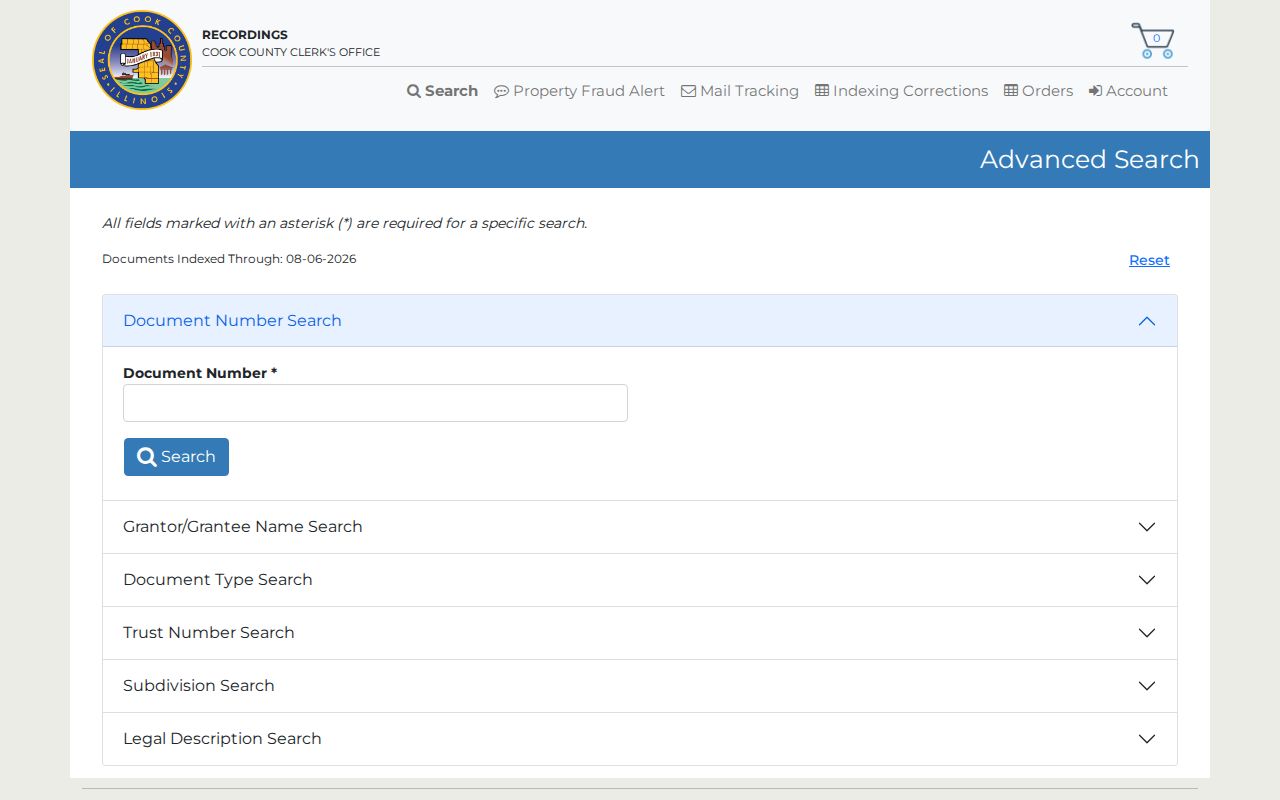
The advanced Clerk recording search accepts names, document numbers, document types and dates, trusts, subdivisions, and legal-description fields. The full search also accepts an address or PIN, and its own tips call the PIN the best key. Search both hyphenated and unhyphenated forms when needed.
Start with a deed or transfer instrument. A mortgage or lien does not by itself show a change in title. Read the grantee as the receiving party and grantor as the transferring party, then follow the earlier transfer for the same PIN or legal description. Associated document numbers may lead to corrections, releases, trusts, or transfer-on-death filings.
The linked image below shows the advanced panels used to narrow a Chicago street search by party, document, or land description.
Chicago Permits by Address
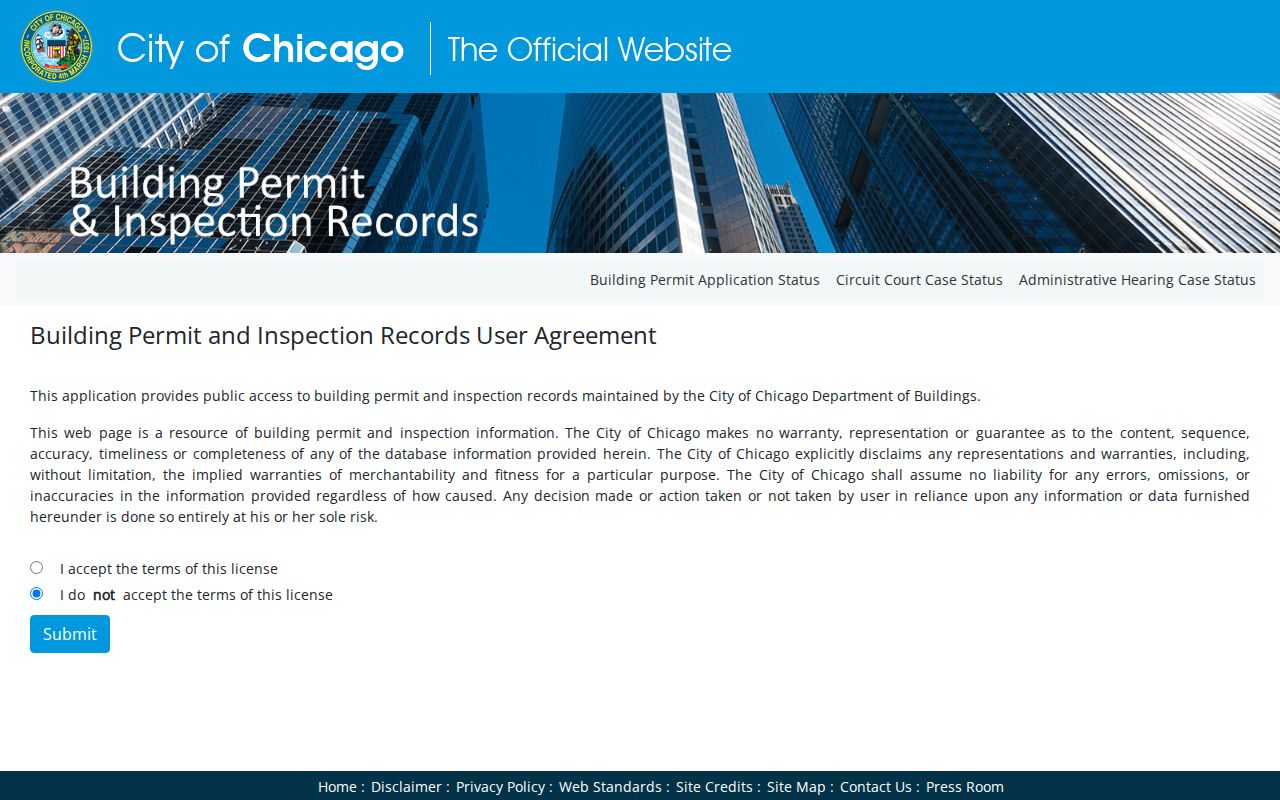
The Chicago building-record search requires acceptance of its terms before an address query. Results can connect an address or range to permits, inspections, and cases. They are evidence that a city file is associated with the site, not proof that work was completed or that a named applicant lived there.
This image shows the address entry point for the city record system.
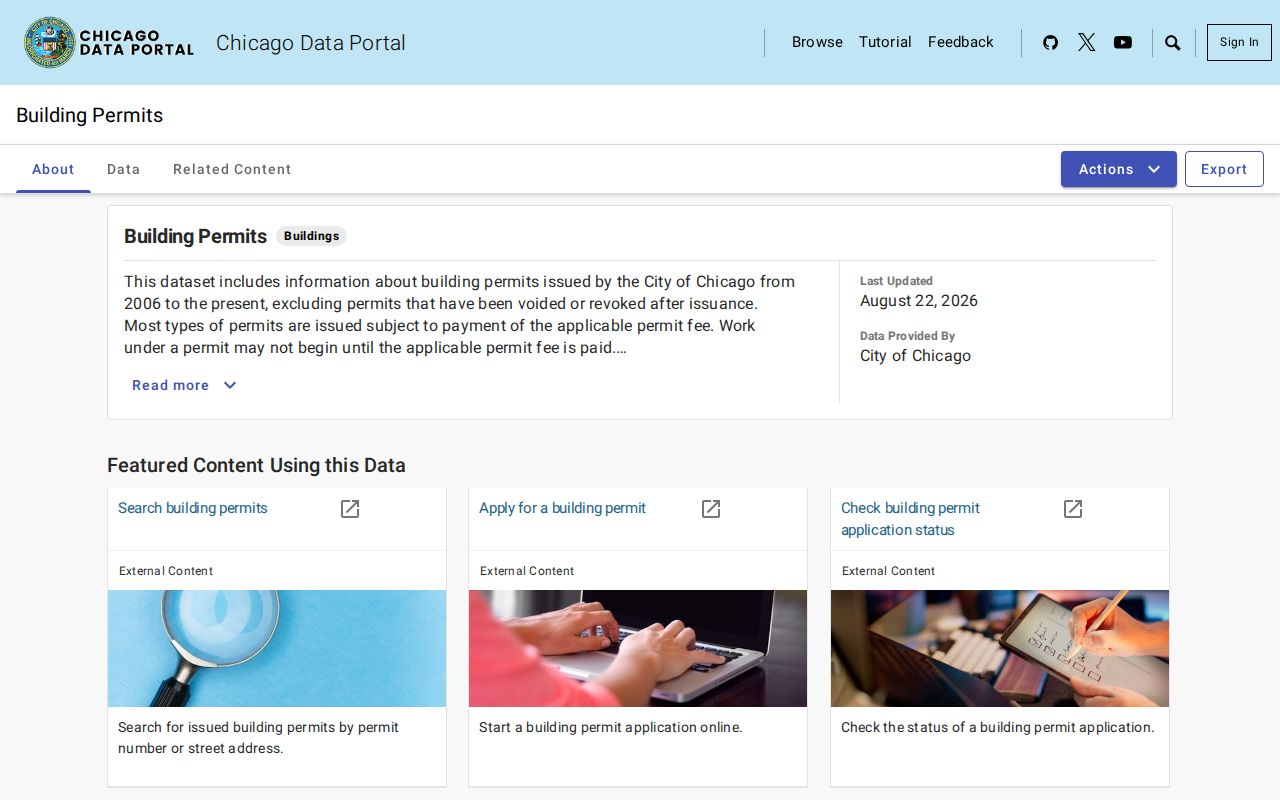
The separate Chicago building-permit dataset begins in 2006. Its fields include permit dates, work descriptions, addresses, and PINs where available. The captured dataset view below is useful for filtering a block, while older permit research follows the city house-history guide, UIC holdings, or a Department of Buildings FOIA request.
When Chicago Streets Changed Names
Historic address work has a Chicago-specific trap. Most house numbers changed in 1909, and the final numbering changes took effect on April 1, 1911. Ann Street later became Racine in 1928. Pulaski had earlier names, Crawford and 40th Avenue. A correct old directory entry can therefore vanish when searched only under today's number and name.
Use the Chicago Public Library's Municipal Reference Collection Street Name Index, City Clerk Street Guide, old-and-new number guide, cross streets, and Sanborn sheets to build a bridge. The State and Madison origin, 100 numbers per one-eighth mile block, and even or odd side pattern can help, but the exact historic guide controls.
Haines criss-cross books then reverse the usual city-directory method by starting at a street number and returning an occupant or business. The full historical shelf and its year runs belong on the Chicago city directory page.
Check Chicago Tax Addresses
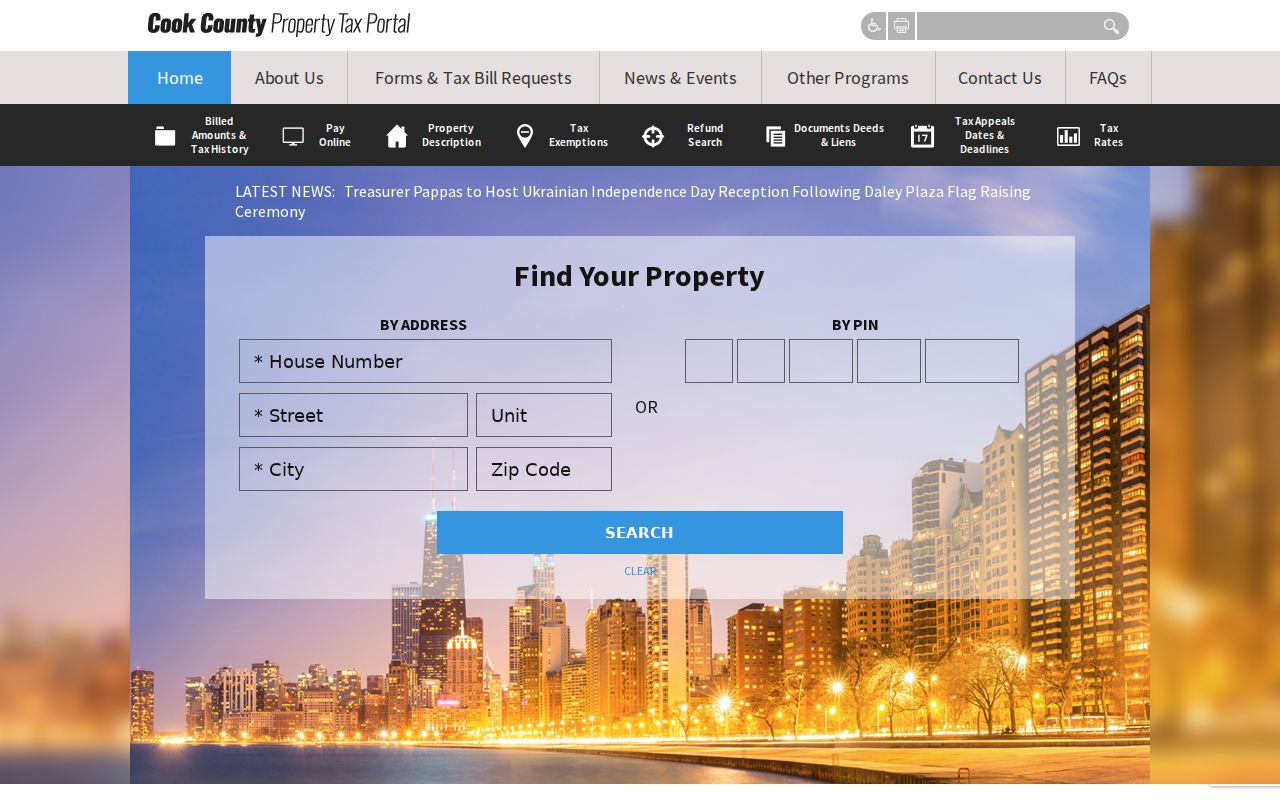
The Cook County property information portal offers a second PIN and address route. It can show the property location, tax-bill mailing address, bills, exemptions, and links to recent recorded documents. The screenshot below shows that combined tax and property search surface.
Tax history can strengthen a deed trail, yet it cannot turn a title holder into a confirmed occupant. Trusts, firms, estates, and off-site owners may appear. Match names and dates to the Clerk's instruments before drawing a conclusion.
Chicago Voter Checks by Address
The Illinois registration lookup asks for a known person's first and last name, birth date, and five-digit ZIP. A second stage asks for street number and a street name drawn from that ZIP. It confirms a supplied record; it does not offer a button to list everyone on a Chicago street.
For a focused election-record request, the Chicago Board of Election Commissioners FOIA form supports requests for voter registration, maps, poll sheets, walk sheets, or described records. Ask for specific wards, precincts, fields, dates, and whether inspection or a redacted copy is sought. Illinois Election Code limits and protected-address rules still apply.
Note: A failed voter match may reflect input, timing, protection, or record status and does not prove that a person is unregistered.
Limits of Chicago Street Directories
A Chicago street directory cannot disclose every renter, child, guest, utility customer, delivery recipient, or household member. DMV addresses are restricted, utilities do not publish customer rolls, and voter data has statutory redactions and use limits. A permit applicant may be a contractor. A deed grantee may be a trust or entity. A tax mailing destination may be far from the property.
Official sources also have technical and date gaps. CAPTCHA can block an automated search. The Clerk does not state the first online index year. City open permit data begins in 2006, and a permit can be absent because the site predated annexation or survives only in an older repository. Mark a no-result as unresolved until the office, library, archive, and historic-address routes have been checked.
Lawful use. Use Chicago address records only for lawful personal research, civic understanding, family history, or fraud prevention. Never stalk, harass, intimidate, or harm anyone.