
Chicago Resident Lookup Sources
Chicago has no single public resident roll. A sound lookup separates present-day associations from historical evidence and asks what each record can truly confirm. The Cook County Assessor ties an address to a parcel, while the Circuit Clerk links a name to a public case. The Illinois voter tool tests a supplied identity and address combination. Vital indexes, probate files, business records, and licenses can add dates, relatives, or affiliations, but most do not prove a current home.
| Record | What It Confirms | Where to Search | Access |
|---|---|---|---|
| Parcel and tax record | Parcel, situs, mailing lead, exemptions | Cook County Assessor and Property Information | Free search |
| Voter registration | Match, status, street and ZIP context | Illinois Registration Lookup | Free, sensitive fields restricted |
| Court docket | Case number, parties, dates, status, events | Cook County Circuit Clerk | Free web summary; official file at Clerk |
| Vital index | Historical event, relatives, date, place | Cook County Clerk and FamilySearch | Indexes vary; current copies restricted |
| Business or license | Entity role, credential, status, work location | Illinois SOS and IDFPR | Free individual search |
| Probate and obituary | Estate role, relatives, dated life event | Circuit Clerk, CPL, IRAD | Mixed online and repository access |
Choose the first search by the strongest known fact. An address points toward the parcel card and deed index. A full name plus date of birth and ZIP supports the voter tool. A deceased relative calls for an obituary, historical vital index, and probate file. When the aim is a modern professional or business affiliation, use the Illinois Secretary of State and Department of Financial and Professional Regulation. The best resident lookup records both matches and conflicts rather than forcing them into one profile.
Define the Chicago Resident
Common Chicago names can produce scores of unrelated hits. Before searching, write down the full name as known, middle initial, suffix, maiden or former names, approximate birth year, a date range, a known address or ZIP, and one relative or organization. Accents, hyphens, transliteration, and spelling shifts matter in a city where Census data reports that more than a third of residents age five and older speak a language other than English at home.
A parcel identification number, or PIN, is especially useful when property is involved. It fixes the inquiry to one legal parcel even when the street label changes. Yet a parcel owner, deed grantee, tax-mail recipient, and current occupant may all be different. That Chicago resident lookup myth is the reason two independent fields should agree before a result is attributed to a person.
Same-name check. Match at least two of address, date, relative, PIN, case number, entity, or license before accepting an identity.
Chicago Voter Lookup Fields
The Illinois Registration Lookup is a two-stage confirmation tool, not a downloadable Chicago voter directory. The first screen requires first name, last name, birth date, and a five-digit ZIP. After the ZIP validates, the second screen asks for a street number and supplies a street-name list. A no-match is inconclusive because a spelling difference, stale address, protected record, or list-maintenance status can stop the match.
| Screen field | Input | How it narrows the lookup |
|---|---|---|
| First and last name | Text; required | First name allows letters and spaces; last name also allows hyphens and apostrophes |
| Birth date | Date; required | Used to match, but not displayed as a full public result |
| Five-digit ZIP | Numbers; required | Builds the next screen's street choices |
| Street number | Text; required | Tests the supplied address number |
| Street name | Dynamic list; required | Selects a street associated with the ZIP |
Illinois does not use permanent party registration in the usual general-election sense. Do not read a match as a ballot choice or full voting history. Election Code rules restrict sensitive data such as birth dates, phone numbers, signatures, identification numbers, and parts of email addresses. The Chicago Board of Election Commissioners accepts focused records requests, including requests for inspection, copies, or certified copies, through its FOIA form.
Confirming Chicago Court Matches
The Cook County Circuit Clerk's online information page warns that the public docket is a brief electronic summary. The official record is the hard-copy file at a courthouse or repository, and web updates can lag. Smart Search accepts a case number or a name in last-name, first-name order. A wildcard can help with spelling variants. Advanced controls can narrow by location, party, business, case type, status, file-date range, judicial officer, or other available identifiers.
A search result can display up to 200 rows with case number, defendant or party, file date, type, and status. Opening a case may show summary information, related cases, closures, warrants, and events in reverse date order. The first 50 events may require Show More or Show All. Because the live public endpoint rejected unattended access during research, no sample party was invented.
- Copy the exact case number and party-name order.
- Record file date, case type, status, and location.
- Note the judicial officer and public event history.
- Check related cases or warrant fields only when displayed.
- Request the official file when the summary matters.
Public terminals and Clerk staff are the fallback when the web docket fails. Juvenile, sealed, expunged, adoption, and other protected material does not become public merely because someone knows a name. For federal matters, PACER serves the Northern District of Illinois and applies account and usage fees.
Verify Chicago Resident Records
Verification means following one identity through records that were created for different purposes. Start with the record closest to the known fact, preserve its date, and compare it with a second custodian's record. Do not turn an old court address, a tax mailing address, or a business office into a claim of current residence.
- Normalize the name, including middle initial, suffix, former spelling, and an approximate age or date range.
- Anchor the person to an address with a voter match or to a parcel through the Assessor, tax portal, and PIN.
- Search the Circuit Clerk, business, or license index with the same variants. Compare dates, places, and roles.
- Use a historical vital index, obituary, or probate file to confirm family and life-event details when relevant.
- Order a certified copy from the custodian only when an official document is required and access rules allow it.
- Docket
- The court's dated list of a case's filings, hearings, orders, and status events.
- Index vs image
- An index is a searchable list of facts about a record. An image is a view of the filed document and may have a fee or access limit.
- Certified copy
- A custodian-issued copy bearing official authentication. A web summary or genealogy copy is not the same thing.
The Cook County Assessor has no public owner-name entry field, so an address or PIN must lead that part of the check. For a broader street inquiry, the Chicago street directory explains the address-first chain without turning it into a one-person profile.
Chicago Vital Record Cross-Checks
Current birth, death, and marriage certificates are not an open resident-name database. The Illinois Vital Records Act limits access, while historical indexes create narrower genealogy paths. Cook County's genealogy form lists copies for births more than 75 years old, marriages more than 50 years old, and deaths more than 20 years old. The statute separately sets older public-inspection thresholds at designated repositories. Borderline requests should be checked with the Clerk.
Useful historical collections include Cook marriages from 1871 through 1969, deaths from 1871 through 1998 with gaps, and birth registers from 1871 through 1915. They can supply relatives, dates, towns, and other identity details. A stamped genealogy copy is not a current certified identity document. The Cook County genealogy request supports mail access when an index or online image is not enough.
In a dated service warning, the Cook County Inspector General reported in December 2025 that Chicago-location vital-record mail orders were at least a month behind; the Clerk said changes had been implemented. Check current service information before relying on that past delay.
Note: A historical index can corroborate a person, but it cannot establish where that person lives now.
Protected Chicago Family Searches
Some family searches require a protected route. For an heir, begin with an obituary and Cook probate index, then obtain the public estate file by case number. Record the executor or administrator and filing date without assuming each named relative still lives at an old address. Older probate indexes and case files can also be held through the Illinois Regional Archives Depository system.
Illinois is a closed-adoption state. A birth-parent search should use IDPH adoption services, the Illinois Adoption Registry and Medical Information Exchange, or the Confidential Intermediary Service. A court-appointed intermediary may search protected files, while identifying information depends on written mutual consent or the applicable court process. That is the lawful path, not a public-name shortcut.
A former classmate search can begin with Chicago Public Library newspapers, yearbooks, and historic directories, then move to a later public record. The Chicago city directory collections are useful for the historical trail, but an old listing must not be presented as a current address.
Chicago Business Identity Checks
A business tie can distinguish two people with the same name. The Illinois Secretary of State entity search accepts business name, registered agent, president, secretary, manager, file number, and keyword or partial-word searches. A result may show formation date, jurisdiction, registered agent, registered office, status, and named officers or managers. Those facts establish an entity role, not a home address.
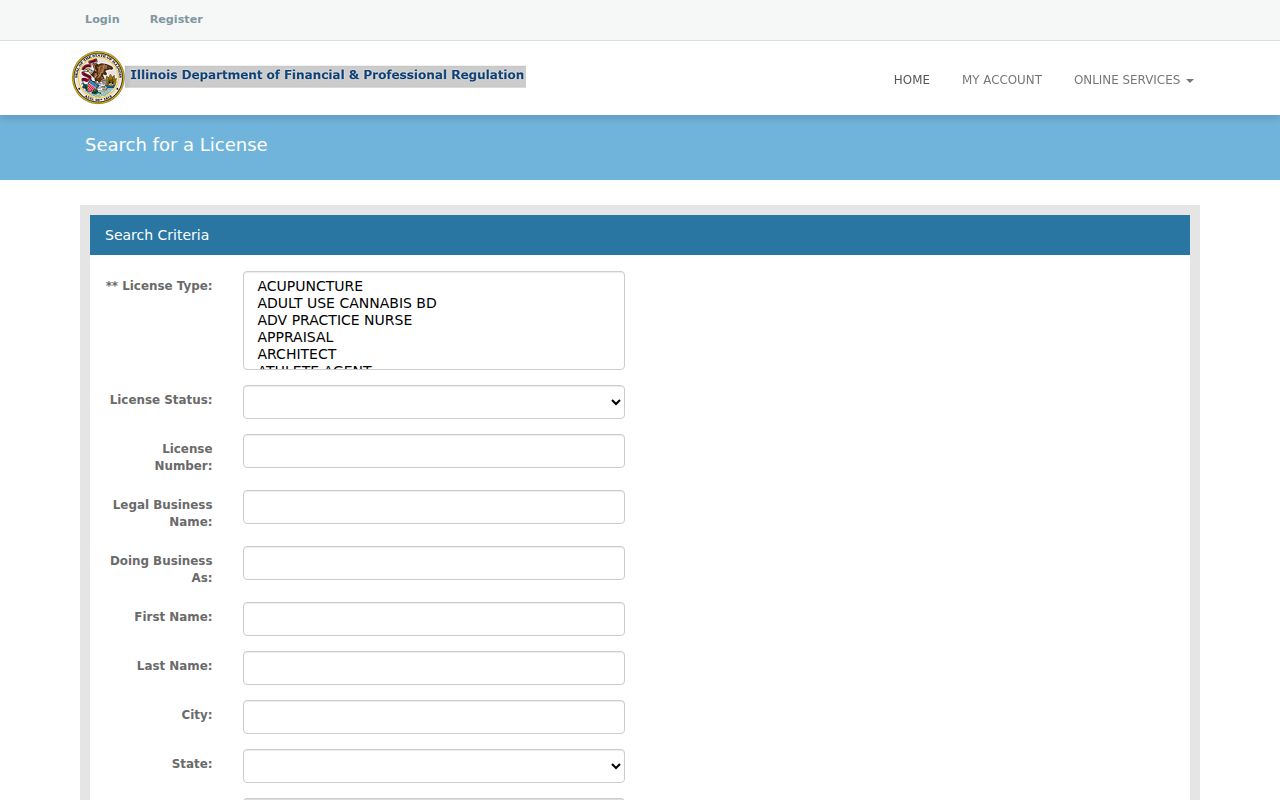
The IDFPR license lookup covers more than 60 regulated fields and can search license type or number, legal business name, DBA, first and last name, city, state, county, ZIP, and status. The page uses CAPTCHA, and the source can lag by roughly a day. Chicago BACP application notices and city economic-disclosure statements provide other dated affiliation records.
The image below comes from the official IDFPR search and shows the controls used to narrow a Chicago professional-license match.
Chicago Custody Record Boundaries
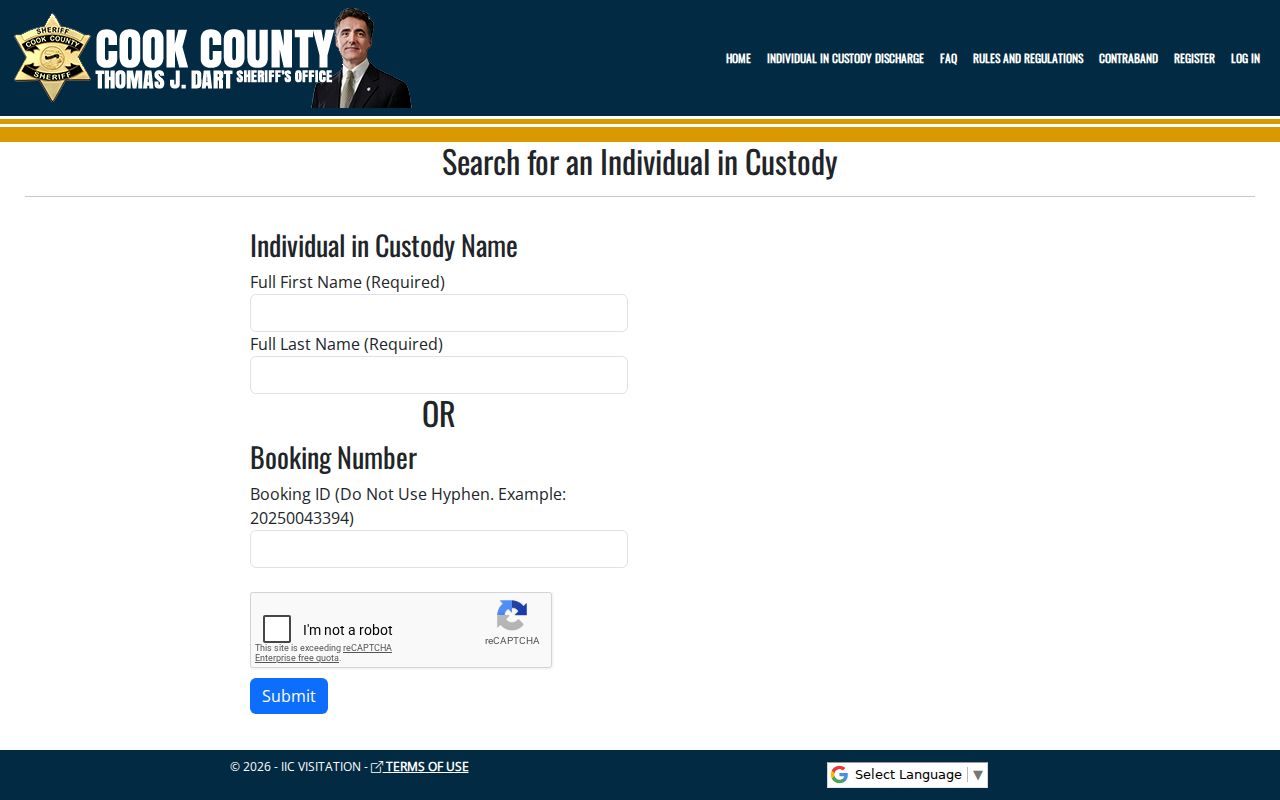
The Cook County Individual in Custody Locator accepts its terms before allowing a name or Booking ID search with CAPTCHA. The image below is linked to that official source. It documents the search entry point, not a live person's result.
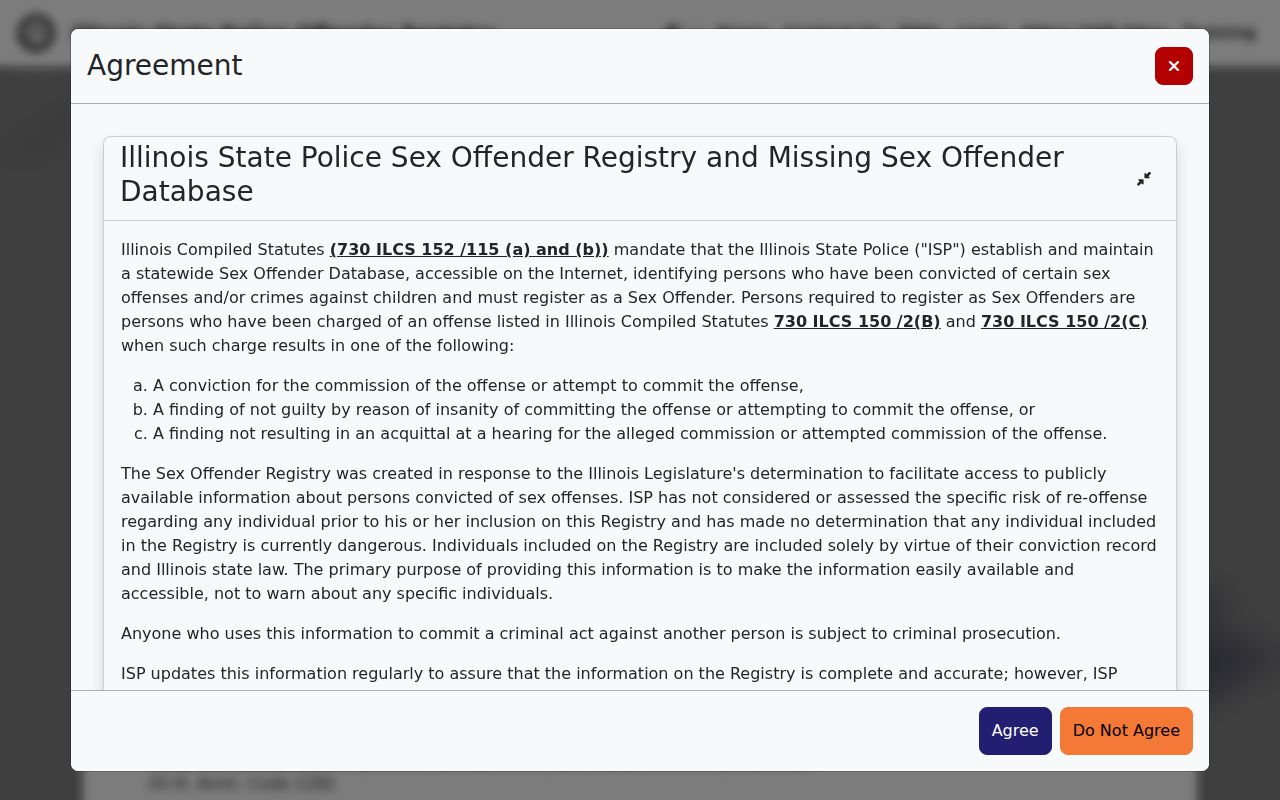
The Illinois Department of Corrections has a separate state inmate search. The Illinois State Police maintains a statutory registry with its own purpose and terms. The official registry screen shown below must be read with those limits.
When Chicago Web Lookups Stop
CAPTCHA, a court-site firewall, a sealed file, an archive-only volume, or a protected address can end an online search for a legitimate reason. The next step is a focused request to the office that holds the record. Under the Illinois Freedom of Information Act, any person may submit a written request. The ordinary response period is five business days, with a possible five-business-day extension. Exemptions and record-specific laws still apply.
- Name the custodian and exact record type, not merely “all records” about a person.
- Give the known date range, case number, PIN, ward, precinct, or document number.
- Ask whether inspection, a redacted copy, or a certified copy is available.
- Request the office's correction path if the source record is wrong.
Assessor errors go to the Assessor, docket errors to the Circuit Clerk, registration issues to the election authority, and business or license errors to the state agency. A private profile removal never changes the official source.
Chicago Resident Lookup Limits
Illinois has no verified one-stop law that deletes a person's information from every public or commercial source. Narrower laws protect biometric data, motor-vehicle information, voter details, sealed cases, and vital records. The Illinois Attorney General's Address Confidentiality Program gives qualifying survivors a substitute address for new state and local records. It does not erase old records, and the Attorney General says real-property records are not currently confidential under the program except where another legal rule applies.
Commercial profile services may offer their own removal steps, but deleting a copied profile does not correct a deed, parcel card, court docket, voter file, or archive. Use the custodian's process for an official error. Do not infer that a person is absent from Chicago because a protected or incomplete search returns nothing.
Lawful use. A Chicago resident lookup is for lawful personal research. Never use a record to stalk, harass, threaten, or harm anyone.