
Finding Chicago Residents by Clue
Start with the fact least likely to change. A Chicago street address points first to a parcel and its Property Index Number, or PIN. A full name works better in deed, court, license, and business indexes. An old address calls for city directories, maps, newspapers, and house-history files. Each record describes a role, not a whole household. The tax roll identifies an owner and mailing address; a deed names parties to a transaction; a voter check confirms registration only when all required details match.
A sound Chicago residents directory search pairs two independent sources. Spellings, initials, aliases, and old street numbers can split one person's trail, while two people may share a name. Record the exact fields, date, agency, and identifier before moving to the next source.
- Normalize the name or address and note any unit.
- Use the Cook County Assessor to obtain the PIN.
- Search Cook County Clerk recordings for named parties and dates.
- Check the appropriate voter, court, license, or business source.
- Move to library directories and archives for older trails.
Chicago Residents Records Custodians
Chicago has no single public roster of everyone who lives in the city. The trail is divided among Cook County, the City of Chicago, Illinois agencies, courts, and research libraries. Recording Operations keeps the land-document index, the Assessor describes parcels, and election authorities control voter data. The Circuit Clerk is separate from the County Clerk and holds trial-court dockets and files. That division matters when a result must be corrected, certified, or taken beyond its online summary.
Cook County Clerk Recordings
118 N. Clark St., Room 120
Chicago, IL 60602
312-603-5050
Illinois Voter Lookup
State Board of Elections
Chicago and Springfield offices
312-814-6440
Cook County Property Anchors
The free Cook County Assessor search accepts a PIN, address, neighborhood, or advanced parcel and appeal filters. It is CAPTCHA-gated and has no owner-name field. A result can supply the situs address, classification, building and land values, characteristics, exemptions, appeal history, and neighborhood sales. Situs means the location assigned to the parcel. It can differ from both the tax-bill mailing address and the legal description in a deed.
| Search route | Input | Best use |
|---|---|---|
| PIN | Fourteen-digit parcel number | Link tax, deed, and GIS records |
| Address | House number and street | Find the current parcel |
| Neighborhood | Assessor area code | Compare nearby parcels |
| Advanced | Parcel and appeal filters | Narrow a broad result set |
The companion Cook County Property Information portal also accepts required house number, street, and city fields, plus optional unit and ZIP. It can show five years of tax amounts and exemptions, recent recorded documents, values, and the tax-bill mailing address. That mailing address is not proof of residence.
The Cook County Assessor address search is the first public stop for a parcel-first search.
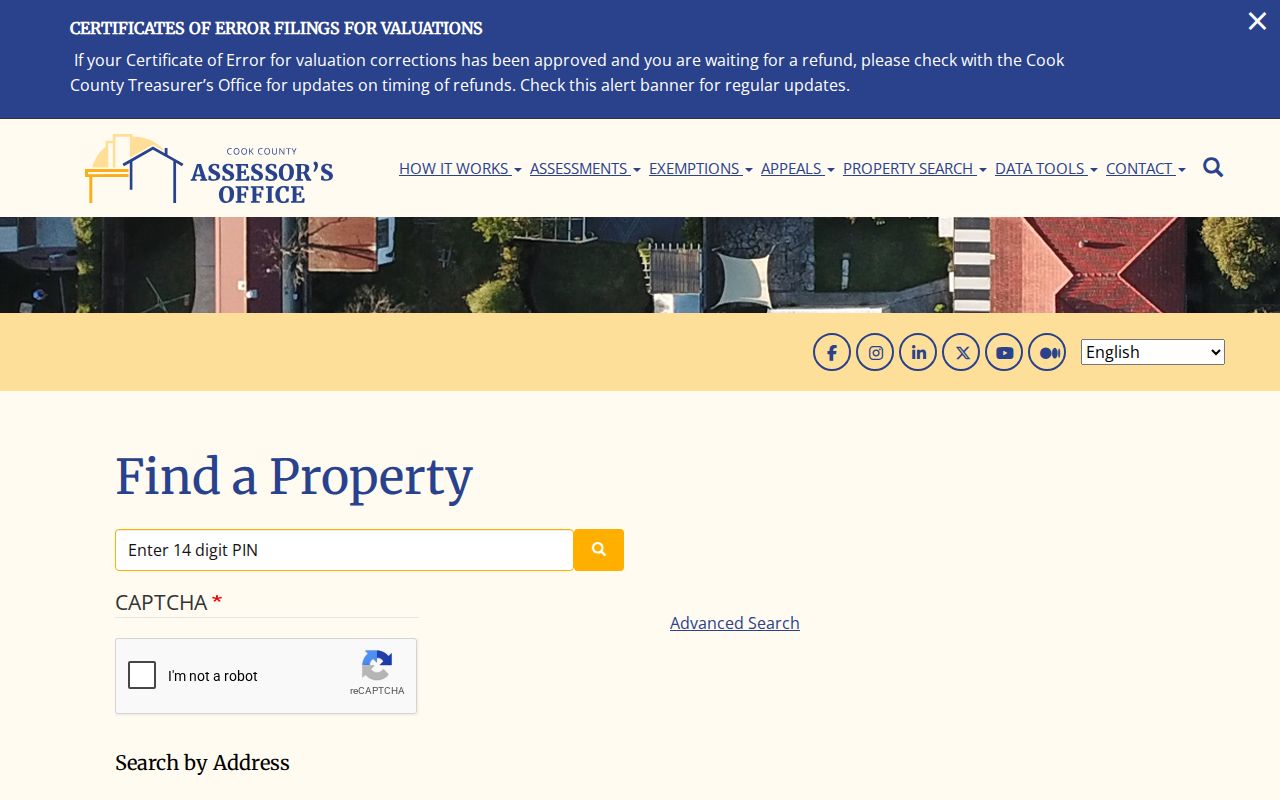
Its separate search modes show why the PIN is the stable bridge between an address, CookViewer, tax data, and Clerk recordings.
Chicago Deeds Name Parties
The Cook County Clerk's Recordings System is a free index to deeds, mortgages, liens, easements, plats, and many other instruments. The former Recorder of Deeds ceased as an independent office in 2020, when the Clerk assumed recording duties. During inspection the portal said documents were indexed through August 6, 2026, but did not disclose the first year of online coverage.
Full search accepts a name, address, PIN, or document number. Advanced search adds grantor or grantee role, type, recorded-date range, trust number, subdivision, and legal-description controls. A grantor transfers an interest; a grantee receives it. Results show document number, recorded and executed dates, type, first parties, associated document, and PIN. Images and certified copies cost extra, while several plat and declaration classes are office-only.
The Cook County Clerk recordings search keeps the index open even when a full document must be purchased.
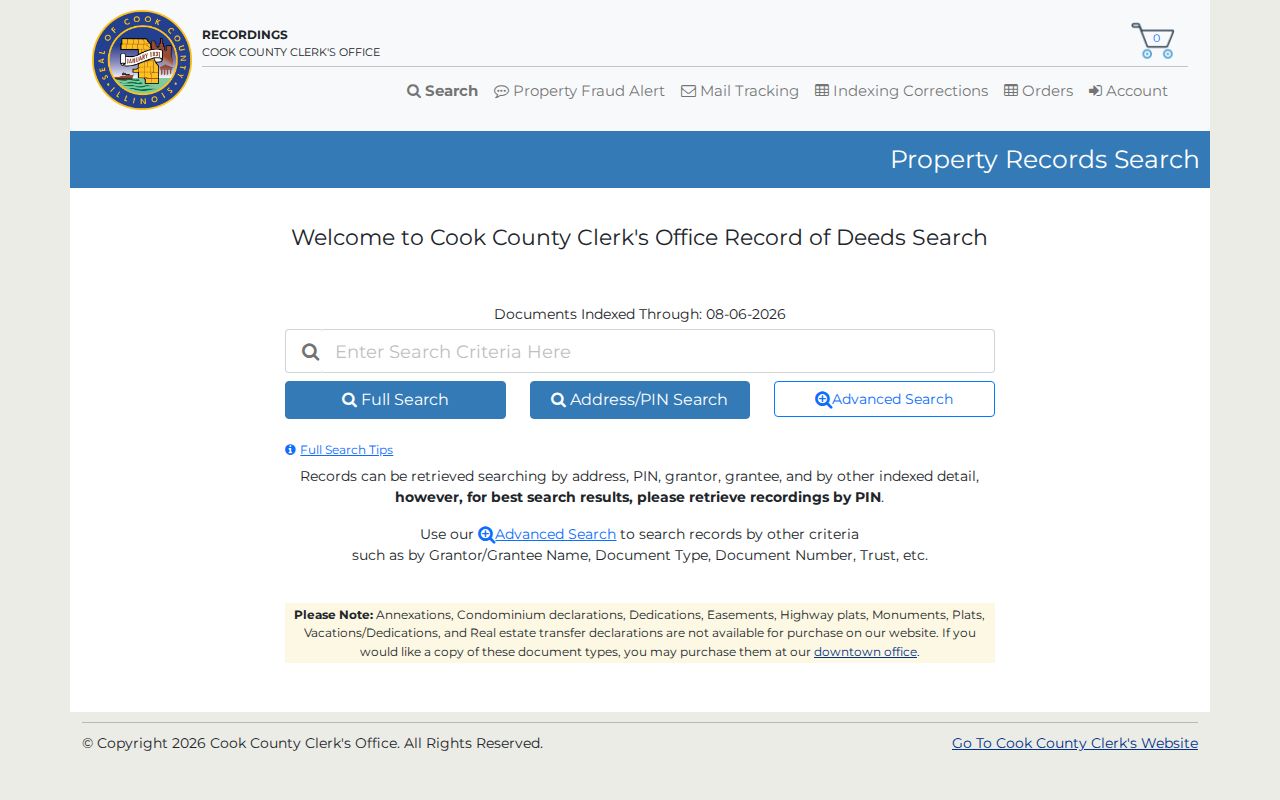
Use a PIN and party role to test identity, since its address is informational and is not guaranteed to be legal or mailing data.
Illinois Voter Checks Stay Narrow
The Illinois registration lookup asks for first name, last name, birth date, and five-digit ZIP. A second stage requests street number and a street name chosen from a generated list. This verifies someone who already knows the identifying facts; it is not a browse of all Chicago residents on a block. Election Code restrictions also limit copying and prohibit personal, private, or commercial use of released registration data.
A failed match does not prove that a person never registered. A changed ZIP, old address, spelling, or incomplete street selection can break the query. Historical voter material is a separate archive task through local election authorities and repositories.
Use records lawfully. Public access does not authorize stalking, harassment, threats, or attempts to defeat an address-confidentiality protection.
Current Chicago Residents Directory Sources
Modern sources cover defined groups, not the whole city. The best source depends on whether someone appears as an owner, voter, case party, licensed professional, business officer, person in custody, or public board member. Some portals provide only a summary, while an official image or certified file requires a fee or direct request.
| Source | Who It Lists | Keeper | Access |
|---|---|---|---|
| Property and tax roll | Parcel owners | Cook County | Free portal |
| Registration lookup | Matching registered voters | Illinois elections | Exact-detail check |
| Recording index | Deed and lien parties | Cook County Clerk | Free index |
| Boards directory | Appointed members | City of Chicago | Free online |
| License lookup | Regulated professionals | Illinois IDFPR | Free form |
An official record has a named custodian, defined purpose, and correction route. A commercial profile compiles data from many places and can merge old and current facts. Treat the latter only as a lead. For a focused identity check, the Chicago resident lookup workflow shows how to compare sources without mistaking a shared name for a match.
Chicago Courts Confirm Roles
The Clerk of the Circuit Court of Cook County is the official route for Chicago trial-court case information. Municipal-code matters remain in the Circuit Court structure; Chicago has no separate municipal trial-court portal. A web docket is a convenience summary, not the official file. It may show party name, case number, filing date, division, status, events, and disposition. A docket is simply the chronological list of filings and court activity.
If the web search is blocked or omits a filing, use a courthouse terminal or request the file from the Circuit Clerk. Federal cases use PACER for the Northern District of Illinois. Same-name court results require an address, age, middle name, case fact, or another independent anchor before they can be tied to a Chicago resident.
Chicago Vital Records Stay Restricted
The Cook County Clerk issues Chicago and suburban Cook birth and death copies, marriage licenses and certificates, and genealogy copies. The Illinois Department of Public Health also handles state certified records and forms. Divorce is a court record, not a vital certificate. These files are not casual name-search databases, and eligibility depends on the record type, relationship, authorization, and identification.
Cook County's genealogy form uses age thresholds of 75 years for births, 20 years for deaths, and 50 years for marriages. The Illinois Vital Records Act separately opens older original or photographic records at designated repositories after longer periods. Verify the current rule and custodian before ordering. Public indexes, obituaries, newspapers, cemetery sources, and IRAD can establish older leads without bypassing access limits.
Chicago Permits Add Address Context
The Department of Buildings lookup begins with a license agreement and then accepts a required building address. Results can show an address range, attributes, permits, code-enforcement cases, inspections, and alleged violations. The open-data permit set covers issued permits from 2006 forward, excludes voided and revoked permits, and supplies address parts, work type, description, processing time, and later PIN fields.
A permit does not prove that work took place or matched approved plans. An inspection entry describes conditions on that visit, and no listed violation does not prove compliance. These are address records, not a full occupant list. They work best after a parcel and recorded owner have been established.
CookViewer Maps Chicago Parcels
CookViewer links the parcel identifier to geometry, nearby land, district layers, archive parcels, imagery, assessment records, measurement, comparison, reports, and exports. Its parcel archive is described as spanning 2000 to the present. The viewer helps when one civic address covers several parcels or a street lookup returns an unexpected range.
The CookViewer parcel map provides the visual bridge between a tax record and the blocks around it.
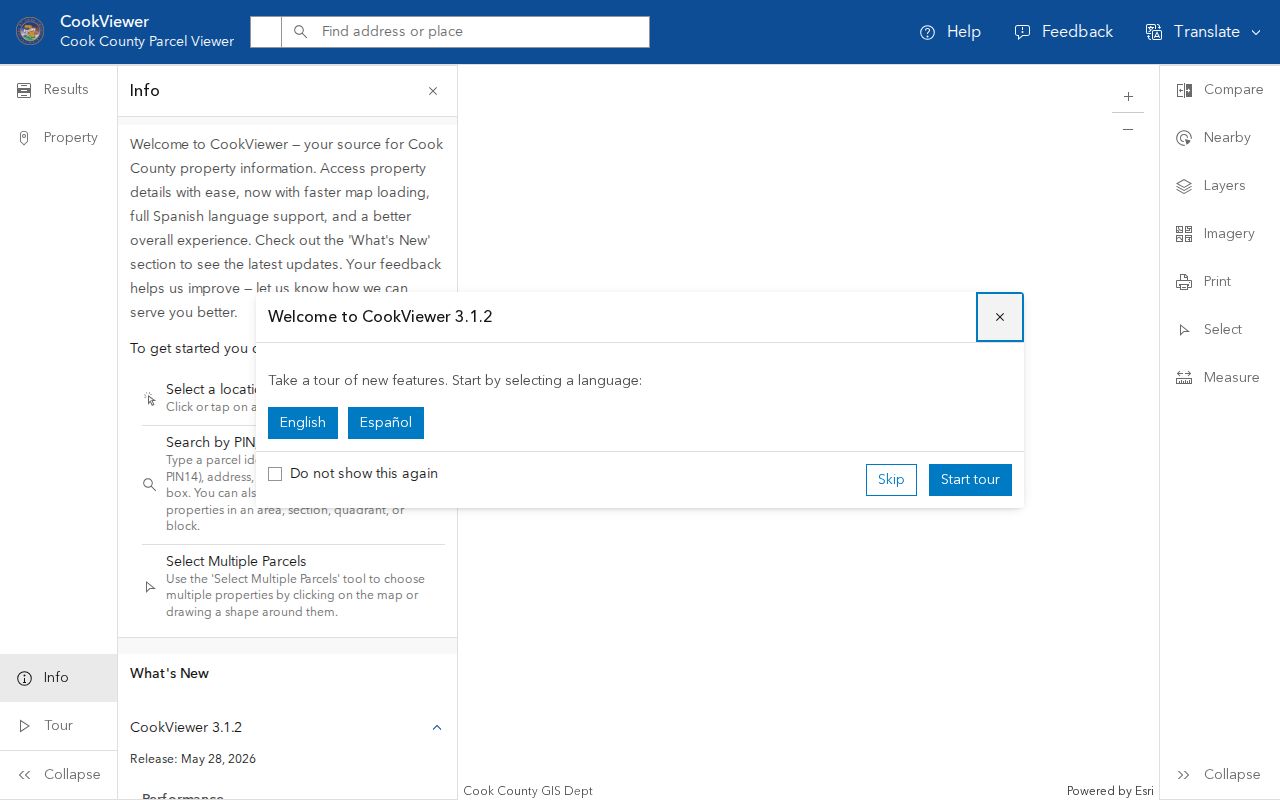
Parcel boundaries and adjacent-property tools help show whether two addresses refer to the same tax parcel or merely sit next to one another.
Four useful terms
Roll: an official list for a set purpose. Index: searchable facts pointing to a full record. Parcel: mapped land with a PIN. Criss-cross directory: a book arranged by street and house number.
Historical Chicago Residents Directories
Chicago's historical trail reaches far beyond current web portals. The Newberry holds early printed volumes and a digitized 1844 directory. Chicago Public Library has regular directories, Haines criss-cross books arranged by address, telephone volumes, historical newspapers, and genealogy databases. The Chicago History Museum Research Center adds manuscripts, photos, maps, architecture files, and published collections. These holdings matter when an address changed number or a street changed name.
The 1909 to 1911 citywide renumbering can break a house trail, and later street renames add another trap. A directory entry may show a name, job, spouse, home address, or business address, with abbreviations defined elsewhere in the volume. Compare adjacent years with census schedules and newspapers. One missing entry is not proof that a household left. The full shelf and its reading method belong to the Chicago city directory collections.
The Chicago Public Library genealogy collection gathers major directory, newspaper, and family-history routes.
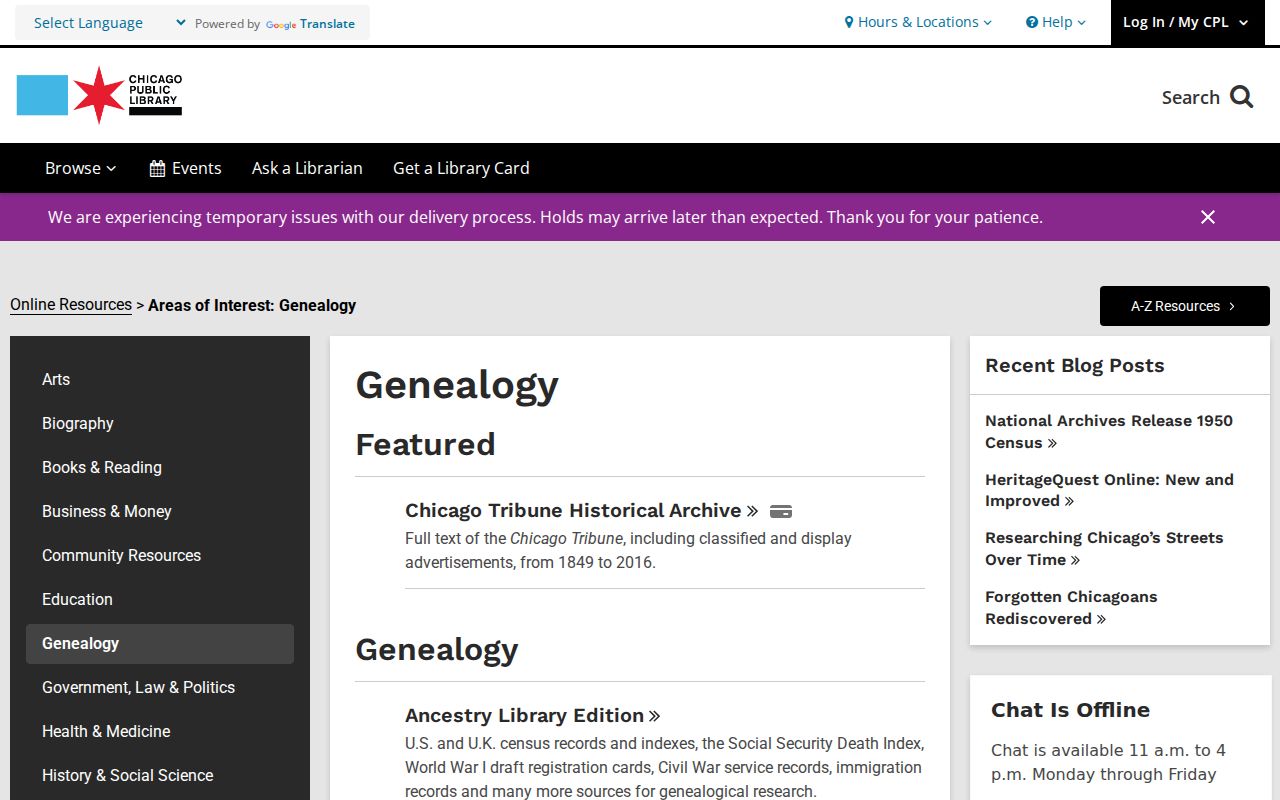
Some tools work only in a branch, some require a CPL card, and others are open on the web, so access should be checked before a research visit.
Chicago Archives Fill Web Gaps
When an online index stops, the next step is a custodian request. The Illinois Regional Archives Depository at Northeastern Illinois University holds older Cook and Chicago government records, including historical probate indexes. Chicago City Clerk archives cover Council records, with other older legislative runs at IRAD and the CPL Municipal Reference Collection. IRAD asks for a full name, record type, approximate year, and county; requests are handled by mail or phone, with no email research service.
The Chicago History Museum Research Center is another key stop for material never converted into a modern residents directory.

Use the ARCHIE catalog to identify a collection, then confirm current appointment, camera, copy, and access rules with the Research Center.
Illinois FOIA Sets the Fallback
Illinois FOIA lets any person submit a written request. An ordinary response is due in five business days, with one additional five-business-day extension when allowed. The first 50 black-and-white letter or legal pages are free, and added pages generally cost no more than 15 cents each. Ask the office that created the record for a defined record type, subject, date range, and preferred format.
FOIA does not open confidential personal data. Vital-record restrictions, voter-file limits, sealed courts, and the Illinois Address Confidentiality Program still apply. That program provides a substitute address for qualifying survivors but does not erase old records; the Attorney General also notes that real-property records are not currently confidential through the program except where another law applies.
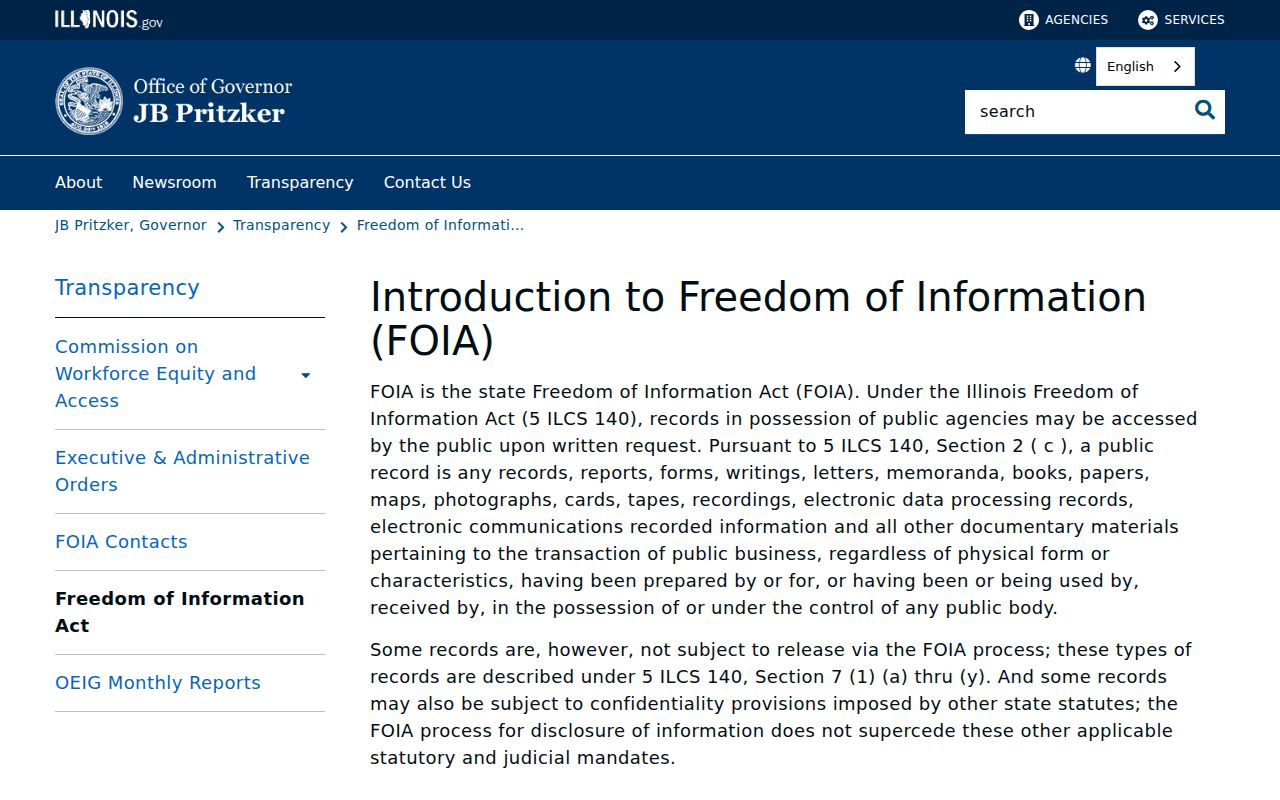
The Illinois Freedom of Information Act overview explains request timing and copying fees.
A focused request to the proper custodian is far more useful than asking broadly for everything connected to a person.